
01
Enterprise Knowledge Graph layer for persistent dependency and system intent modeling.
FEATURED PROJECT | ENTERPRISE AI SOFTWARE ENGINEERING
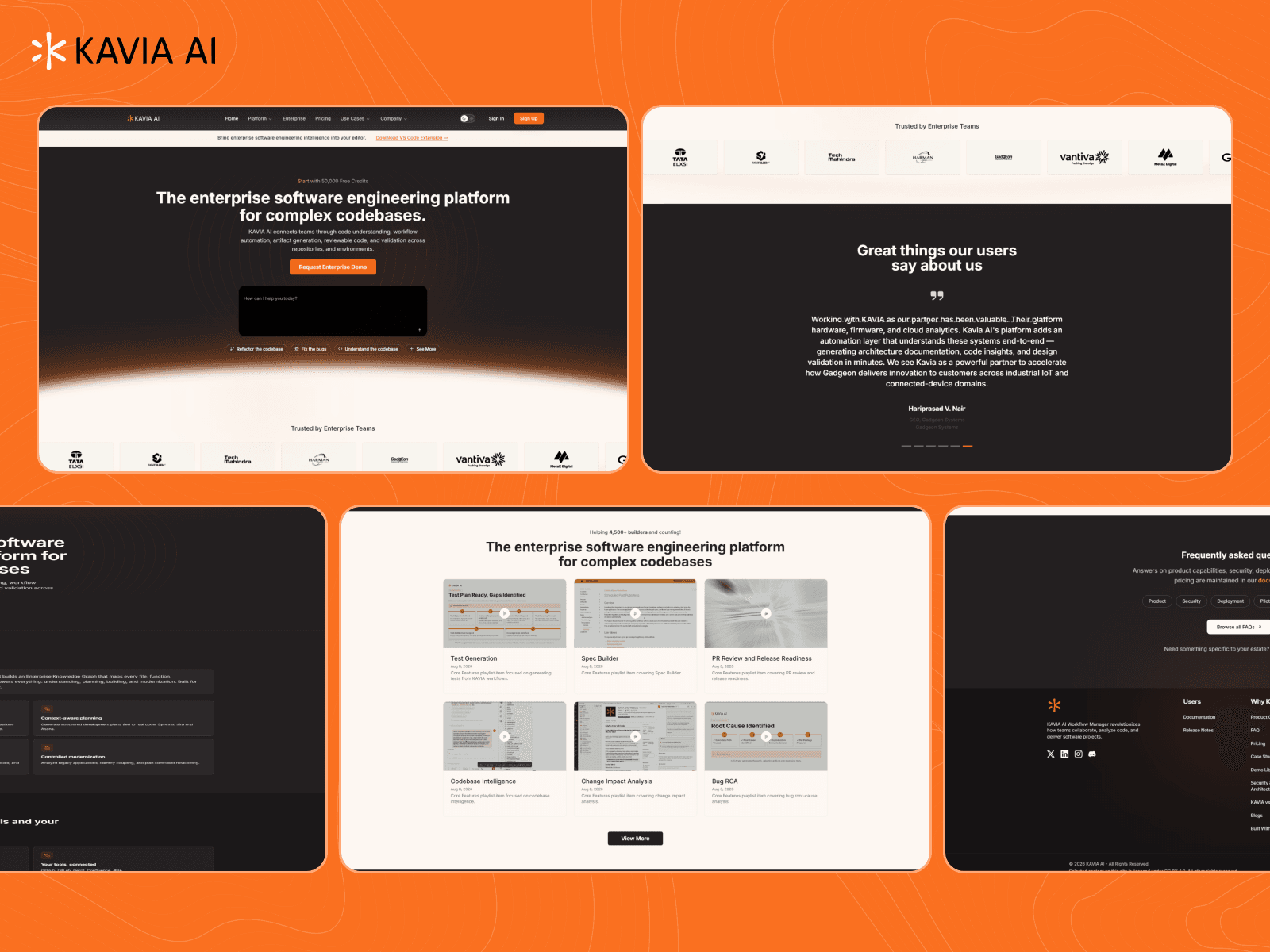
Solving high architectural complexity, fragmented repository context, legacy refactoring risks, and manual development bottlenecks.
10x
Faster Spec-to-Code Iteration
100%
Codebase & Dependency Visibility
4,500+
Active Builders & Developers
Zero
Context Loss Across Teams
Industry Pain Points & Core Challenges
Enterprise software engineering teams struggle with high architectural complexity, fragmented context across repositories, legacy code refactoring risks, and manual development bottlenecks.
Strategic Solution & Platform Architecture
An end-to-end AI-powered software engineering platform that unifies requirements gathering, system modeling, code generation, change impact analysis, automated testing, and PR review into a single governed workflow.
User Journey & Operations
01
Kavia ingests repositories and design specs to generate an architectural knowledge graph of system dependencies.
02
Engineers and product managers draft execution plans using Spec Builder and run change impact analysis to prevent regression risks.
03
Developers use VS Code, CLI, or cloud sessions to trigger agentic code generation and refactoring grounded in real codebase context.
04
Automated test suites run against generated artifacts, producing audit-tracked PR reviews ready for human sign-off.
Architecture & Technology Stack
01
Enterprise Knowledge Graph layer for persistent dependency and system intent modeling.
02
VS Code Extension, Command Line Interface (CLI), and Git-aligned branch management.
03
Multi-model flexibility supporting customer-provided LLM keys and private cloud deployment options.
04
Automated test generation and change impact analysis runtime engines.
05
Audit-first execution ledger tracking approvals, spec revisions, and AI code edits.
Technology Stack
Outcomes & Business Impact
Developers quickly comprehend legacy software systems, architectural intent, and complex cross-repo dependencies.
Product managers, QA engineers, and architects operate inside a shared workspace with common project context.
Every pull request, spec generation, and test artifact maintains full auditability and security compliance.
Next step
Let's discuss how we can help bring your idea to life.