
01
AWS S3 & Cloud Pipelines optimized for zero-loss, background multi-file image upload.
FEATURED PROJECT | AGENTIC SYSTEMS & PROPTECH
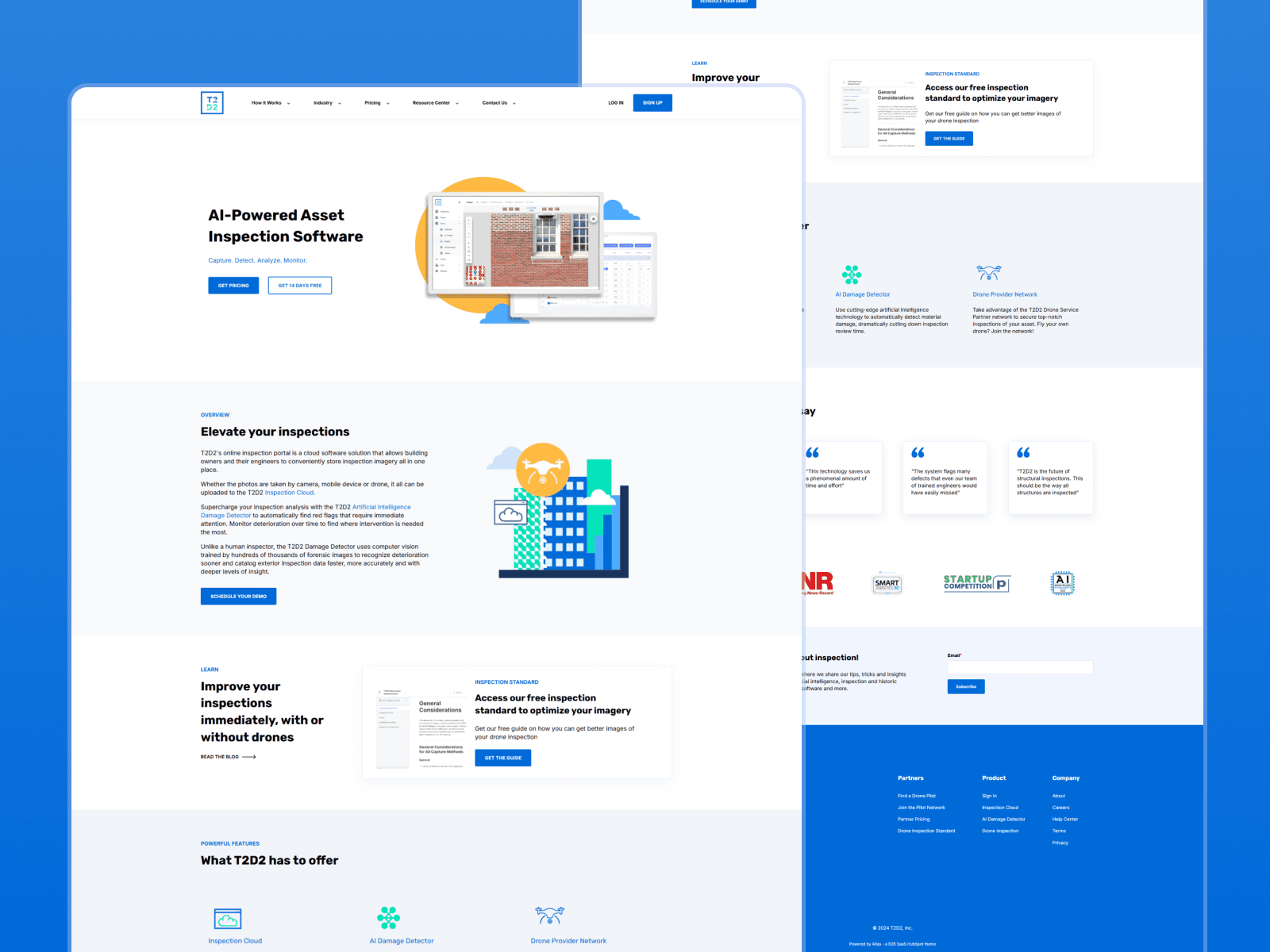
An enterprise cloud inspection platform for automated building facade, damage detection, and structural health analysis.
70%
Faster Exception & Audit Cycles
80+
Damage Types Classified
3.5 TB+
Forensic Image Dataset
100%
Visual Coverage via Drone & Scans
Industry Pain Points & Core Challenges
Structural inspection teams, architects, and property managers traditionally rely on manual facade surveys requiring technicians to swing from ropes, stand on high-altitude scaffolding, or conduct ground-level binocular audits. These methods leave asset owners exposed to undetected structural risks, high inspection hazards, regulatory report rejections, and severe operational inefficiencies.
Strategic Solution & Platform Architecture
T2D2 provides a multi-agent cloud platform where high-resolution structural imagery is automatically processed, damage is identified and tagged with precise bounding boxes, and deterioration is tracked across historical timelines. T2D2 connects asset managers, engineering teams, and drone operators in a unified, audit-ready ecosystem.
User Journey & Operations
01
Field teams or drone pilots capture high-resolution exterior imagery and upload datasets directly to the secure cloud portal.
02
Deep learning models process structural elevations, recognizing cracks, spalling, efflorescence, and moisture anomalies.
03
Engineers review mapped anomalies on interactive maps and 3D digital twins, confirming or adjusting detected conditions.
04
Auto-generate audit-compliant condition reports featuring spatial citations, historical trends, and maintenance recommendations.
Architecture & Technology Stack
01
AWS S3 & Cloud Pipelines optimized for zero-loss, background multi-file image upload.
02
Angular Single-Page Application delivering responsive UI rendering for complex defect overlays.
03
Node.js & Express API Backend handling scalable business logic and MongoDB metadata indexing.
04
Leaflet & Cesium 3D Integration providing real-time spatial mapping and digital twin visualization.
05
PyTorch Deep Learning Engine trained on 3.5TB+ forensic imagery for multi-class defect recognition.
06
Integrated AI Assistant Chatbot for instant metadata queries, asset search, and guided navigation.
Technology Stack
Outcomes & Business Impact
Routine manual image auditing timelines are reduced by up to 70%, allowing structural experts to focus on complex exception evaluations.
Catching surface micro-cracks and spalling early prevents major structural degradation, safety hazards, and regulatory fines.
Every defect detection retains precise spatial coordinates, historical capture timestamps, and raw image lineage for regulatory reporting.
Next step
Let's discuss how we can help bring your idea to life.