
Business impact
Named KPI
Cost-to-serve, cycle time, exception rate, revenue quality, or risk, chosen before architecture.
For CEOs, founders & business owners
We help enterprises identify where AI creates P&L leverage, then design, build, and industrialize governed systems you own. Cost, speed, risk, and competitive position first. Technology second.
P&L
KPIs tied to cost, speed, revenue & risk
90d
Typical path to a governed production system
Owned
Full IP transfer, no platform lock-in
Honest
We say no when AI is the wrong lever
Perspective
Most AI programs fail the board test for the same reason: the demo is impressive, but nobody owns the operating metric, the security posture, or the path past the pilot. Boards do not fund fluency. They fund durable capability that shows up in the P&L and the risk register.
Why now: copilots are already inside the estate, shadow spend is accumulating, and competitors who industrialize governed workflows will lock in cost and cycle-time advantages that are hard to unwind. Waiting is also a decision, usually a more expensive one.
InheritX is an AI-native enterprise partner. We help you identify, design, build, deploy, and scale AI systems that create measurable business impact, with private deployment and IP that stays with you. If AI is not the right lever, we will say so.
Executive snapshot
Four signals that separate a fundable AI program from vendor theater.
Business impact
Named KPI
Cost-to-serve, cycle time, exception rate, revenue quality, or risk, chosen before architecture.
How we work
Governed path
Mandate → feasibility → production constraints → industrialize. Budget releases have exit criteria.
What you own
Your IP
Systems, agents, retrieval, and orchestration transfer to you. Capability is not rented indefinitely.
What happens next
One call
A strategy session to pressure-test the opportunity, or a clear no if AI is the wrong move.
Production proof
Published outcomes from systems already in production. These metrics belong to those engagements, they are not a forecast of yours.
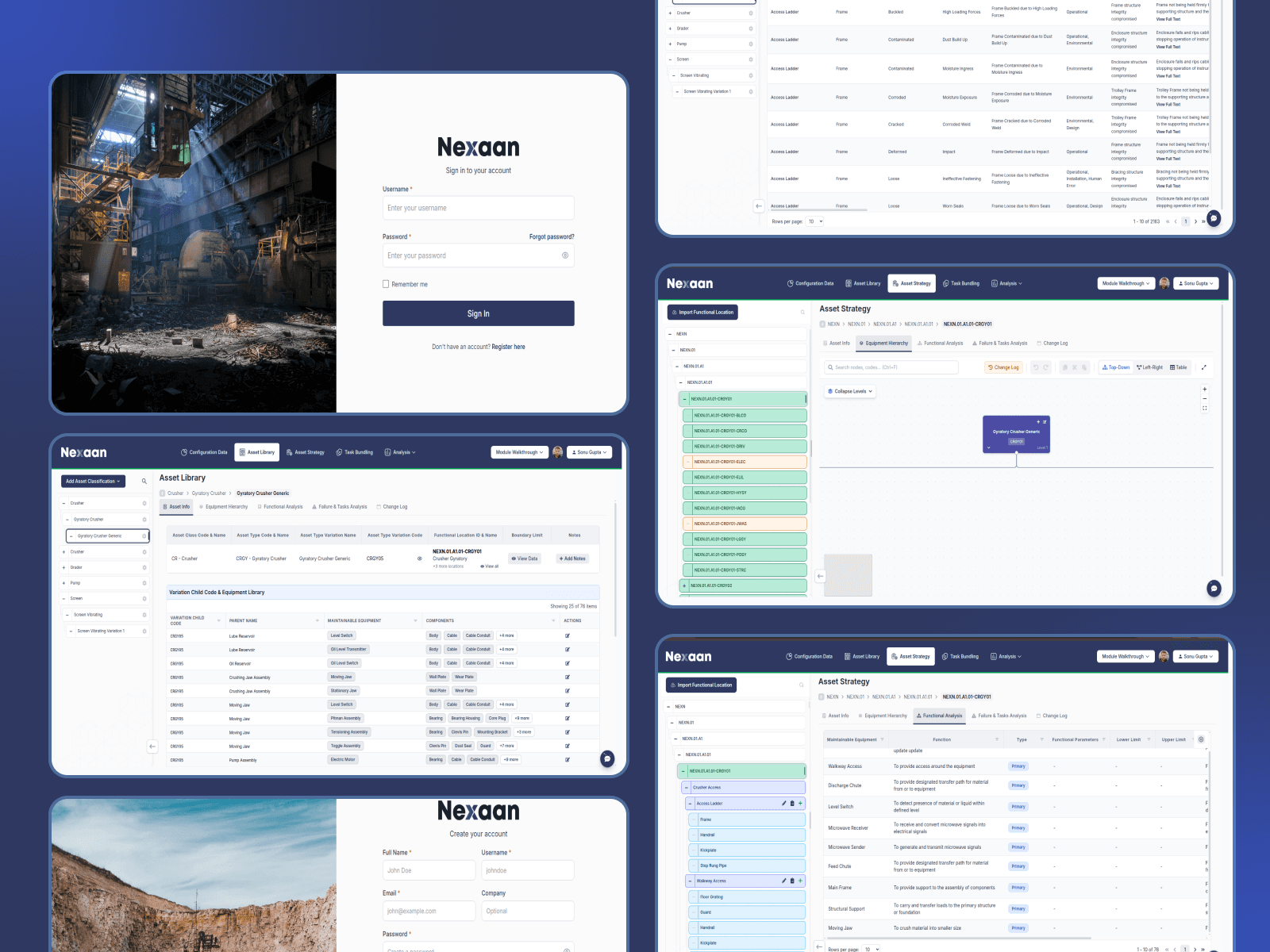 Industrial & Mining Tech
Asset Performance Management for Mining
250%
ROI Across Brownfield Ops
500%
ROI on Operational Readiness
Conceptual framework
Fund high-impact, lower-complexity workflows first. Platform bets come second. Do not buy autonomy before the operating metric and data are real.
A decision map for where to invest first, not a forecast of your results. Categories reflect how enterprise AI programs typically concentrate value.
Start here
High impact · lower complexity
Document-heavy operations
Clinical notes, claims, contracts, onboarding packs, high volume, repeatable structure, clear time-to-complete.
Exception & triage workflows
Routing, first-pass review, and queue compression where humans currently batch-process the same pattern.
Platform bets
High impact · higher complexity
Enterprise knowledge platform
Shared retrieval, citations, and access control so every BU is not rebuilding search from scratch.
Multi-agent operations
Tool-using agents across core systems, with human gates on money, customers, and irreversible actions.
Later / optional
Lower impact · lower complexity
Copilot overlays on existing SaaS
Useful for individuals. Rarely a board program unless tied to a named operating metric.
Do not fund first
Lower impact · higher complexity
Ungoverned autonomy
Agents without evaluation, policy, or data foundations. High spend, weak P&L story. Do not fund first.
Business impact: higher at top · lower at bottom
Conceptual framework for briefing. Your sequence is set by data access, risk class, and the KPI you are willing to own. Not measured client statistics.
Dual view
Risk matrix
Boards care as much about downside as upside. Design for both.
| Risk | Without production design | With InheritX approach |
|---|---|---|
| Pilot theater | Budget spent on demos that cannot scale or pass security | Governed pilots with explicit scale criteria and CISO path |
| Vendor lock-in | Capability evaporates at renewal or exit | Full IP transfer and operable runbooks for your teams |
| Shadow AI spend | Department copilots with no shared control plane | Platformized routing, policy, cost caps, and audit trails |
| Irreversible agent actions | Autonomy without human gates on money/risk | Tool scoping, approvals, and escalation by design |
Roadmap
A briefing-friendly sequence. Actual calendars depend on data access, risk class, and estate readiness.
Week 0-2
Strategy session or executive workshop: confirm the workflow, board metric, and go / no-go on AI.
Week 2-6
Target architecture, security posture, value case, and industrialization criteria.
Week 6-14
Ship under production constraints, integrations, evaluation, auditability, human gates.
Ongoing
Scale across BUs, harden LLMOps, transfer IP, and enable internal ownership.
Decision signals
If a partner cannot answer these cleanly, the program will not survive diligence, or the first security review.
Cost-to-serve, cycle time, exception rate, revenue lift, or risk reduction, named before architecture. Not “engagement with the assistant.”
Explicit scale criteria: accuracy bars, human gates, CISO sign-off, operating owner, and runbooks after go-live.
Build vs. buy vs. embed framed honestly, including where SaaS copilots create shadow spend and where owned systems compound.
Models, agents, retrieval corpora, and orchestration transfer to you. Capability is not rented indefinitely.
Executive next step
A focused strategy session on mandate, the first workflow worth funding, and whether to pursue a workshop, assessment, or governed build.
Decision matrix
Match urgency to motion. Do not start with a catalog tour.
| Need | If this is true… | Start here | Primary proof |
|---|---|---|---|
| Need proof before a board ask | Case studies + strategy session | Named outcomes & methodology | Open |
| Need enterprise transformation partner | AI Transformation program | Value case → production systems | Open |
| Need a governed build under your operating model | Dedicated AI squads | Architect-led delivery, IP you own | Open |
| Need a flagship agent platform pattern | Agent Bank reference | Governed multi-agent banking workflows | Open |
Continue
FAQ
Name one KPI, ship a governed production-constrained release against that KPI, and report accuracy, cost, risk controls, and operating ownership, not demo anecdotes.
Yes. Engagements are structured for full IP transfer of systems built for you, agents, orchestration, fine-tunes, and integration code.
We will say so. A useful strategy session often ends with a clearer process or data decision, and no build.
As the AI systems partner alongside enterprise IT and cloud partners, not a rip-and-replace of trusted vendors.
Aligned mandate, KPI, risk class, investment shape, and a written next-step recommendation your steering group can act on.
A strategy session or opportunity assessment under NDA when required, then a scoped statement of work. Security questionnaires and the Diligence Pack are available before a master agreement.
A prioritized workflow, value hypothesis tied to a named KPI, risk class, and a go / no-go on whether AI is the right lever, without committing you to a build.
Executive next step
A focused strategy conversation on mandate, the first workflow worth funding, risk posture, and whether to pursue a workshop, assessment, or governed build.