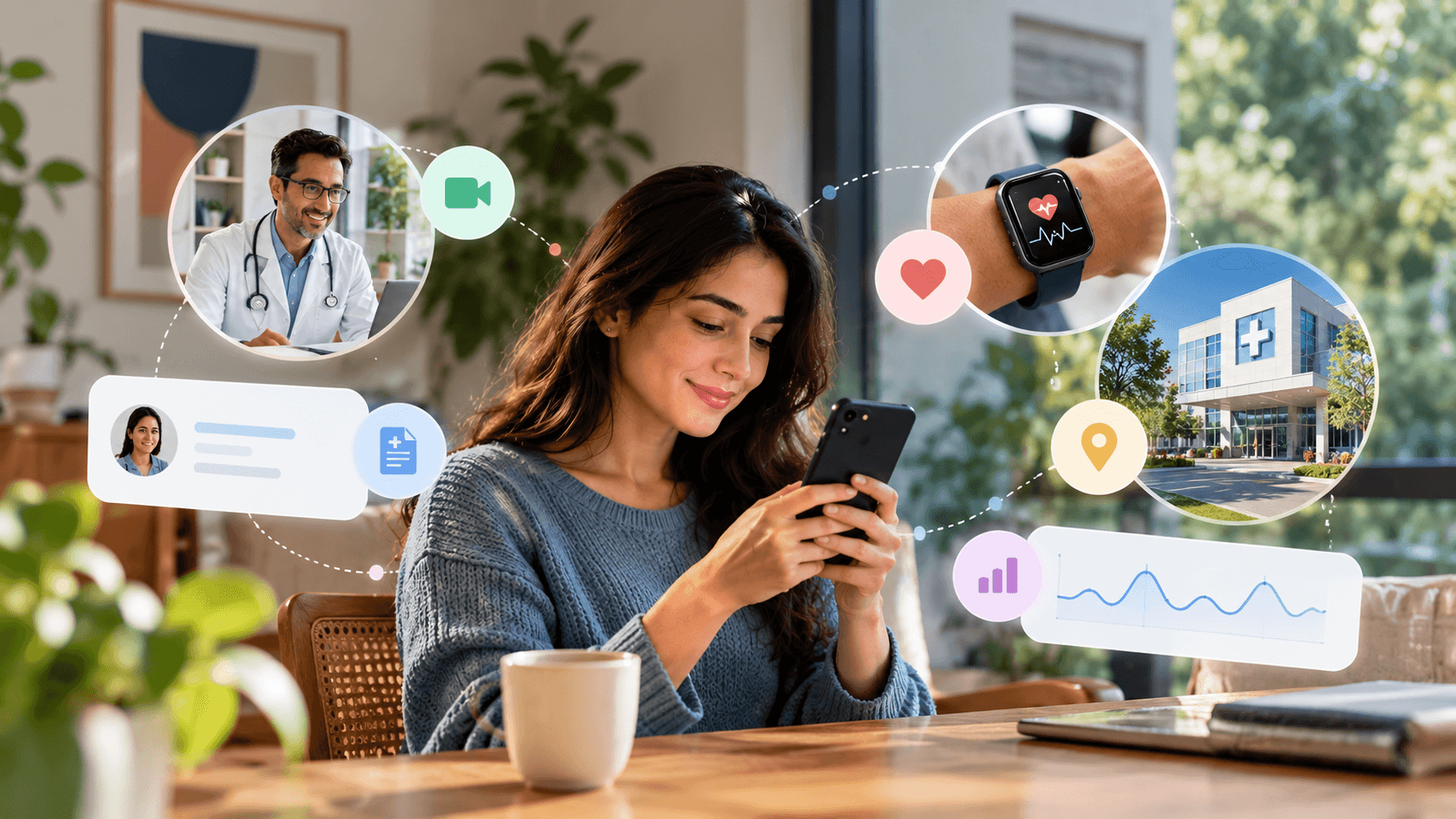
Healthcare systems around the world face a persistent challenge: patients frequently encounter structural and logistical barriers to receiving timely, accessible, and individualized care. Traditional medical models have long relied on a standardized approach, applying generalized treatment pathways and broad public health guidelines to diverse populations. While foundational, this one-size-fits-all approach often fails to address the unique genetic, environmental, and lifestyle factors that influence an individual's health outcomes.
To answer the growing demand for medicine that recognizes individual variability, AI-powered healthcare platforms have emerged as vital digital ecosystems. These platforms bridge the gap between patient needs and clinical resources, helping connect individuals, healthcare providers, and care services seamlessly.
Introduction: Healthcare That Understands the Individual
At its core, modern healthcare strives to deliver the right care to the right person at the right time. Yet, achieving this goal remains difficult due to fragmented patient data, clinician shortages, and administrative bottlenecks.
AI-powered healthcare platforms leverage modern software engineering, cloud infrastructure, and machine learning to analyze large volumes of health information. By processing data efficiently, these platforms help healthcare providers identify individual health patterns, streamline administrative burdens, and deliver personalized interventions. Rather than replacing human expertise, these technologies serve as sophisticated tools designed to support clinicians and empower patients throughout their wellness journeys.
What Are AI-Powered Healthcare Platforms?
AI-powered healthcare platforms are integrated digital systems that utilize artificial intelligence and machine learning algorithms to support, coordinate, and optimize healthcare delivery. Unlike conventional electronic health record (EHR) systems which primarily store static historical data, AI-enabled platforms actively analyze incoming data streams to generate actionable insights.
These platforms combine cloud computing, secure databases, and predictive analytics to assist with tasks such as workflow automation, clinical decision support, and remote patient monitoring. By integrating multiple data sources into a unified interface, they allow care teams to collaborate more effectively and respond to patient needs with greater precision.
Why Personalized Healthcare Is Still Difficult to Access
Despite medical and technological advancements, personalized healthcare remains difficult to access for many populations due to several systemic challenges:
- Limited Access in Underserved Areas: Rural and remote communities often lack specialized medical facilities and adequate numbers of healthcare professionals.
- Long Waiting Times and Fragmented Information: Disconnected health systems make it hard to transfer medical histories smoothly between primary care physicians and specialists.
- Coordination Gaps: Managing chronic conditions requires continuous monitoring and timely follow-ups, which can easily fall through the cracks without coordinated care systems.
- Individual Variability: Every patient responds differently to treatments, making generalized care plans less effective than tailored interventions.
- Infrastructure and Cost Barriers: High healthcare costs, uneven digital infrastructure, and disparities in broadband access prevent many individuals from utilizing digital health tools.
How AI-Powered Healthcare Platforms Make Personalized Care More Accessible

To overcome these barriers, modern digital health solutions incorporate specific AI-driven applications designed to enhance both the accessibility and personalization of care.
AI-Powered Virtual Health Assistants
- The Problem: Patients often struggle to navigate complex healthcare systems, understand discharge instructions, or determine whether symptoms require urgent attention.
- How It Works: Conversational AI tools utilize natural language processing (NLP) to interact with patients via secure web portals or mobile applications.
- Improvement in Access: These assistants provide 24/7 guidance, answering basic health questions and helping users schedule appointments.
- Practical Example: A patient uses a hospital’s virtual assistant app late at night to review post-surgery care instructions and verify warning signs that warrant contacting a doctor.
Personalized Patient Monitoring
- The Problem: Chronic disease management requires continuous tracking that is difficult to sustain through infrequent in-person visits.
- How It Works: Wearable devices and remote monitoring hardware collect physiological data (such as heart rate or blood glucose) and transmit it to cloud based AI platforms for trend analysis.
- Improvement in Access: Care teams can track relevant health indicators continuously without requiring frequent clinic visits.
- Practical Example: A smart blood pressure cuff automatically logs readings for a hypertensive patient, alerting their care team if metrics deviate from normal ranges.
AI-Assisted Clinical Decision Support
- The Problem: Clinicians face massive cognitive loads, reviewing dense patient histories while trying to make timely diagnostic and treatment decisions.
- How It Works: Machine learning algorithms scan patient records against vast clinical databases to highlight relevant patterns, contraindications, or treatment options.
- Improvement in Access: Helps clinicians organize information rapidly, supporting accurate and personalized treatment planning while keeping human professionals fully responsible for decisions.
- Practical Example: An oncology support tool organizes a patient's genetic markers and tumor history, suggesting relevant peer-reviewed treatment pathways for oncologist review.
Predictive Analytics and Preventive Care
- The Problem: Traditional healthcare is predominantly reactive, treating symptoms after they manifest rather than mitigating risks early.
- How It Works: Validated predictive models analyze historical and real time health data to identify individuals at higher risk for specific conditions.
- Improvement in Access: Enables proactive, timely follow up appointments and preventive interventions before conditions escalate.
- Practical Example: A clinic platform flags patients with pre-diabetic indicators, allowing dietitians to reach out early with personalized nutritional guidance.
Personalized Digital Care Plans
- The Problem: Patients frequently forget or misunderstand multi step recovery protocols prescribed after hospital discharge.
- How It Works: AI platforms dynamically generate and update customized care schedules, automated medication reminders, and targeted educational content.
- Improvement in Access: Keeps patients engaged in their recovery regimens from home, reducing readmission risks.
- Practical Example: A cardiac rehab app adjusts physical activity recommendations weekly based on a patient's reported fatigue levels and biometric feedback.
Telehealth and Remote Healthcare Access
- The Problem: Geographical distance and mobility impairments make traveling to physical clinics a major hurdle for vulnerable populations.
- How It Works: Telehealth portals embedded with AI triage tools connect patients directly with remote clinicians based on symptom severity.
- Improvement in Access: Eliminates travel barriers, bringing medical expertise directly to rural or homebound patients.
- Practical Example: A mobility-impaired senior attends a routine endocrinology consultation via a secure video platform from their living room.
Real-World Use Cases of AI in Personalized Healthcare
- Chronic Condition Management: Platforms that aggregate wearable data for patients managing diabetes or heart failure, allowing care teams to intervene proactively.
- AI-Supported Medical Imaging Analysis: Algorithms utilized in radiology departments to assist specialists in identifying subtle anomalies in medical scans like X-rays or MRIs.
- Care Coordination Portals: Enterprise digital health solutions that streamline communication between primary care doctors, specialists, and patients to minimize administrative delays.
- Navigational Virtual Assistants: Automated intake systems deployed by healthcare networks to help patients find the right department, specialist, or service quickly.
How AI Healthcare Platforms Can Help Bridge Access Gaps
AI-enabled digital healthcare offers significant potential to support rural communities, individuals with mobility challenges, and patients facing logistical hurdles. By moving routine consultations and continuous monitoring into digital environments, these platforms reduce the physical distance between patients and clinical expertise.
However, technology alone cannot eliminate healthcare inequality. True accessibility depends on critical external factors, including reliable internet connectivity, affordability, device availability, clinical workforce capacity, and digital literacy. Addressing these foundations is essential to ensure that AI-driven advancements benefit diverse populations equitably.
Challenges of Implementing AI in Healthcare
While the benefits are substantial, deploying AI in healthcare requires navigating complex challenges:
- Patient Privacy and Data Security: Protecting sensitive protected health information (PHI) against cyber threats and unauthorized access.
- Algorithmic Bias: Ensuring training datasets are diverse and representative to prevent skewed outcomes for underrepresented populations.
- Clinical Validation and Safety: Maintaining high standards of accuracy through rigorous testing before clinical deployment.
- System Integration: Connecting modern AI tools securely with legacy electronic health record (EHR) systems used by hospitals.
- Regulatory Compliance: Adhering to strict frameworks such as HIPAA, GDPR, and FDA guidelines for Software as a Medical Device (SaMD).
- Human Oversight: Ensuring that AI systems operate strictly under the supervision of qualified healthcare professionals.
How InheritX Solutions Can Support AI-Powered Healthcare Platform Development
Building secure, scalable, and intelligent digital health systems requires specialized engineering capabilities. InheritX Solutions acts as an experienced technology partner for organizations looking to design and develop robust software solutions tailored to the healthcare sector.
InheritX Solutions provides deep expertise across several foundational technology domains:
- AI and Machine Learning Engineering: Designing custom algorithms and integrating predictive models into software workflows.
- Cloud Infrastructure & Scalable Architecture: Building flexible, high-performance cloud environments capable of handling growing data volumes securely.
- DevOps and Deployment Automation: Ensuring continuous integration, reliable updates, and minimal downtime for mission-critical software.
- System Integration: Connecting modern applications seamlessly with existing databases, APIs, and enterprise systems.
Whether you are developing a remote patient monitoring dashboard, a digital health application, or an AI-enabled workflow tool, InheritX Solutions delivers reliable software engineering support to bring your vision to life.
Ready to build intelligent, scalable digital platforms? Explore how InheritX Solutions can help your organization innovate with confidence.
The Future of Personalized and Accessible Healthcare
The trajectory of healthcare points toward increasingly connected, patient-centered ecosystems. As machine learning models mature, cloud infrastructure expands, and remote monitoring tools become more precise, digital health platforms will play an instrumental role in coordinating care.
Current capabilities such as automated triage, predictive risk scoring, and telehealth integration lay the groundwork for future advancements. Over time, responsible automation and robust data governance will help create healthcare systems that are more responsive, proactive, and attuned to individual patient needs.
Conclusion: Making Personalized Healthcare More Accessible Through Technology
AI-powered healthcare platforms represent a powerful step forward in making personalized care more accessible, efficient, and tailored to the individual. By streamlining workflows, bridging geographical divides, and empowering patients with actionable insights, these technologies help foster a more connected medical ecosystem.
Crucially, artificial intelligence should never replace healthcare professionals and human judgment. Technology serves its highest purpose when it amplifies empathy, clinical expertise, and patient-provider collaboration.
To learn more about developing secure and scalable digital solutions, visit InheritX Solutions.
Key Takeaways
- AI-powered healthcare platforms integrate machine learning and cloud technology to support personalized patient care and streamline clinical workflows.
- Key applications include virtual health assistants, remote patient monitoring, clinical decision support, and predictive preventive care.
- Technology helps bridge geographical and logistical gaps, though reliable internet connectivity and digital literacy remain vital for true accessibility.
- Implementing healthcare AI requires strict adherence to data privacy, regulatory compliance, and rigorous clinical validation.
- Human oversight is essential; AI tools are designed to assist not replace qualified healthcare professionals.
- Experienced technology partners like InheritX Solutions help businesses build secure, scalable software architectures for digital health innovations.
Frequently Asked Questions (FAQs)
1. What are AI-powered healthcare platforms?
AI-powered healthcare platforms are integrated digital systems that use artificial intelligence and machine learning to analyze health data, automate workflows, support clinical decisions, and improve patient communication and monitoring.
2. Can AI independently diagnose or treat patients?
No. AI systems are designed to assist healthcare professionals by organizing data and highlighting patterns, but they do not independently diagnose, treat, or make medical decisions. Clinical judgment remains paramount.
3. How do these platforms improve patient care accessibility?
By combining telehealth, virtual assistants, and remote monitoring, these platforms allow patients in remote or underserved areas to connect with care teams and monitor health indicators without needing frequent in person visits.
4. What are the main security and privacy concerns in healthcare AI?
Key concerns include protecting sensitive patient health information (PHI) against breaches, maintaining regulatory compliance (such as HIPAA), and preventing algorithmic bias through representative training data.
5. How can InheritX Solutions assist with healthcare software development?
InheritX Solutions provides expert software engineering services, including custom AI/ML integration, secure cloud infrastructure setup, system integration, and scalable platform development for digital health innovators.