
Architecture
Reviewable
Trust boundaries, data flows, model gateway, and tool policy drawn before sprint zero.
For CTOs, VP Engineering & platform leaders
Architecture, security, and handover, so production AI survives design review and still runs after we leave. Your estate. Your IP.
VPC
Private / hybrid / sovereign deployment
LLMOps
Eval → release → observe → improve
Secure
Policy, audit, secrets, tool sandboxing
Owned
Code, weights, runbooks, your estate
Perspective
The failure mode is familiar: a flashy prototype that cannot pass security review, has no evaluation regression suite, and cannot be operated by your platform team. Engineering leadership does not need more copilots. It needs systems that behave like infrastructure.
InheritX designs and delivers enterprise AI platforms and agent systems in private and hybrid estates, with GitOps-friendly delivery, observability, cost controls, and runbooks your platform team can operate after handover.
Executive snapshot
What we expect to defend in your design review, without a fake scorecard.
Architecture
Reviewable
Trust boundaries, data flows, model gateway, and tool policy drawn before sprint zero.
Release quality
Eval-gated
Golden sets and regression suites as release blockers, not a one-off accuracy slide.
Operations
Handover
Your platform team can deploy, roll back, and extend without vendor presence.
Control plane
Your estate
IAM, secrets, VPC, cost caps, and audit trails in the environment you already run.
Production proof
Published architecture and reliability outcomes, not a scored audit of your estate.
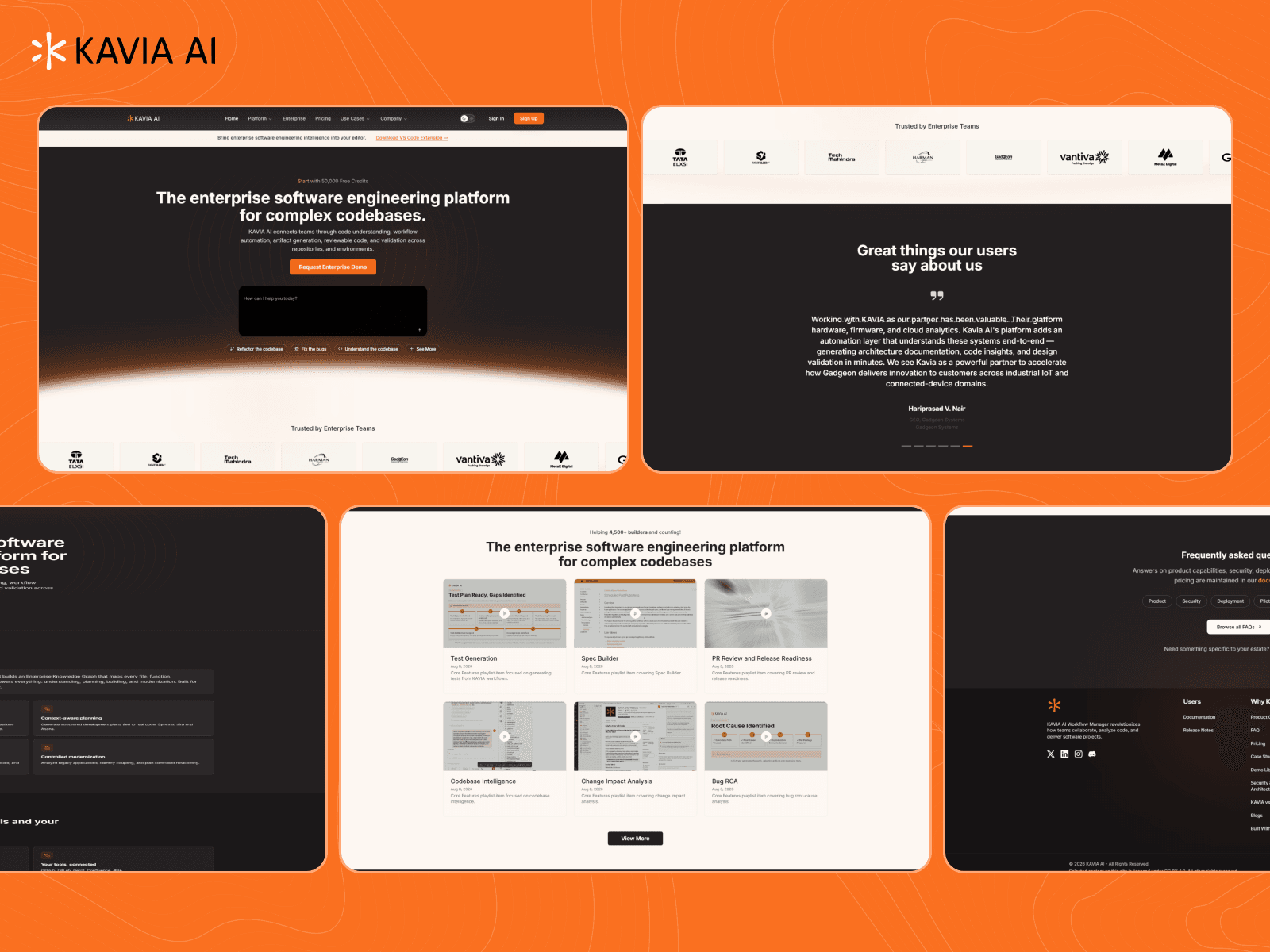 Enterprise AI Software Engineering
Enterprise Software Engineering Platform
10x
Faster Spec-to-Code Iteration
100%
Codebase & Dependency Visibility
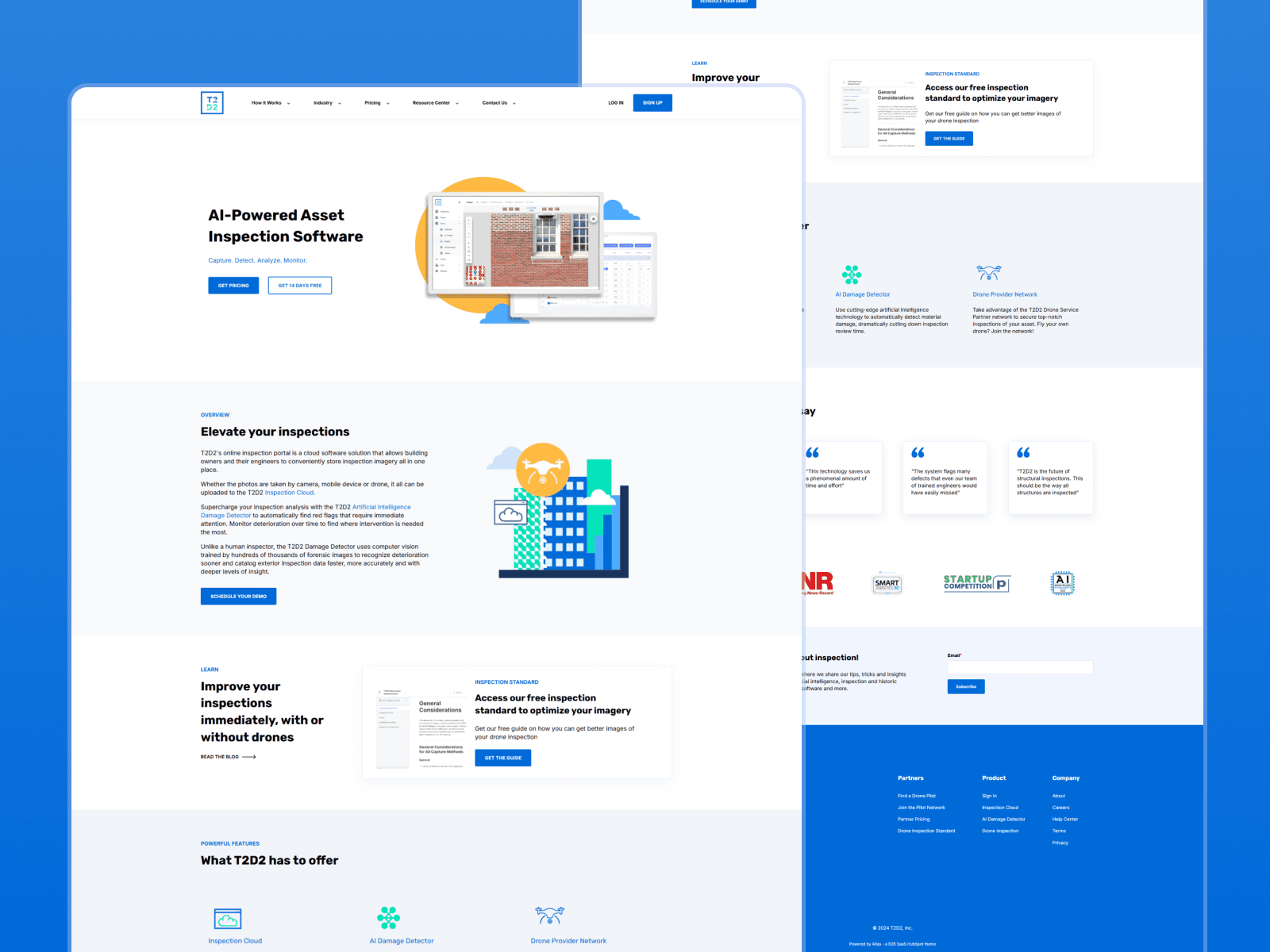 Agentic Systems & PropTech
AI-Powered Building & Asset Inspection Platform
70%
Faster Exception & Audit Cycles
80+
Damage Types Classified
Conceptual framework
Intelligence sits on a real data and control plane. Agents are an application layer, not a substitute for architecture.
A pressure-testable topology. We map your estate onto this before we propose build.
01
Systems of record, documents, events, and approved APIs, with residency and classification explicit.
02
Pipelines, corpora, vector/search fabric, and access control the rest of the stack can trust.
03
RAG, routing, fine-tunes when earned, document intelligence, and model gateway policy.
04
Your approved providers and serving path, Bedrock, Azure OpenAI, Vertex, or private vLLM.
05
Orchestration, MCP/tool calling, HITL queues, and channels your users already work in.
06
ERP, CRM, core banking, clinical, and plant systems, integrations with scoped credentials.
07
Tracing, eval, cost, audit, incident runbooks, and policy in runtime, not a PDF after the fact.
Conceptual reference architecture, not a latency SLO, capacity plan, or measured benchmark.
Architecture
A pressure-testable layer model, not a product catalog. We map your estate onto this before we propose build.
Experience & channels
Agent & orchestration
Intelligence services
Data & knowledge
Platform & ops
Security & control plane
Architecture review
Private cloud, VPC, hybrid, or sovereign, map trust boundaries, data flows, and serving topology before sprint zero.
Readiness
Use this in design review. If answers are vague, the system is not ready for enterprise traffic.
Deployment topology
VPC / private / hybrid paths drawn; egress and data residency explicit
Identity & secrets
Workload identity, vault patterns, no long-lived shared API keys in apps
Evaluation gates
Golden sets, regression suites, and release blockers for quality/safety
Observability
Tracing, latency budgets, token/cost metrics, incident runbooks
Tool & MCP governance
Scoped tools, audit trails, sandboxing, approval for high-risk actions
RAG quality controls
Chunking, hybrid retrieval, citations, corpus freshness, poison resistance
Operability
Platform team can deploy, roll back, and extend without vendor presence
Cost controls
Per-use-case caps, fallback routing, and budget alerts in the control plane
Dual view
Roadmap
From mandate to industrialized platform services.
Discover
Estate, data, compliance, and whether RAG, agents, classical ML, or none applies.
Architect
Trust boundaries, model gateway, retrieval fabric, MCP/tool policy, evaluation plan.
Prove
Production-constrained pilot with integrations, observability, and human gates.
Industrialize
Shared services, hardened LLMOps, IP transfer, enablement for your teams.
Decision matrix
Jump to the lane that matches your current mandate.
| Need | Need | Motion | Start |
|---|---|---|---|
| Enterprise AI platform / RAG | Governed retrieval, routing, policy | Enterprise AI solution | Open |
| Multi-agent production systems | Agents + MCP + HITL | AI Agents + Agent Bank | Open |
| Security & diligence first | CISO-ready materials | Security FAQ + Diligence Pack | Open |
| Need production delivery without hiring lag | Architect-led squads in your rituals | Dedicated AI squads | Open |
FAQ
Both when justified. Simplest approach that meets accuracy and latency bars first; fine-tune when evaluation proves the gap, and document the tradeoffs.
Secrets in your vault patterns; tools scoped and logged; high-risk actions require human approval. Policy before autonomy.
Yes, that is a design requirement. Handover includes architecture, evaluation suites, runbooks, and enablement.
Your approved estate, AWS, Azure, GCP, and your model gateway choices. No proprietary runtime you cannot own.
As a governed tool interface with scoped servers, auditability, and clear trust boundaries, not unrestricted tool sprawl.
GitOps for environment promotion (typically Argo CD on your cluster), CloudOps for VPC/IAM/cost controls in the estate you already run, and LLMOps for eval → release → observe → improve. They are operating disciplines, not a product SKU.
Yes. Topology is a design input: private cloud, VPC, hybrid, or sovereign paths with egress and residency explicit before sprint zero.
Technical next step
Bring constraints, estate, and risk class. Leave with a clearer topology, evaluation plan, and go / no-go on the proposed shape.